From the Founder’s Desk
Welcome to the latest Weekly Wonk.
Hoping my fellow dads and everyone celebrating the dads in their life had an enjoyable Father’s Day.
If like us it had you thinking about child and family policy, our recent WonkCast with Michelle Feit kicked off an ongoing exploration we’re doing on the topic of paid leave.
It offers a window into why child and family policy has many issues that poll well with cross-cutting majorities, yet hit friction moving through the legislative process.
For our Deep Dive, first time Wonk contributor Dr. Jill Berrick expands on a conversation we had around the relationship between poverty and child welfare involvement.
There’s a lively and unsettled debate about the role economic precarity plays in who enters child welfare and what policy options work.
But focusing there skips past another question we breeze right by; what happens when the system itself becomes a source of further precarity after removal?
When nearly half of all children who enter foster care return home, that impact has important policy implications on family stability and reunification.
We’ve also got a Wonkatizer on the data around safety net program enrollment, and what it means for implementation of the One Big Beautiful Bill Act.
Let’s get into it.
Weekly Wonk Deep Dive
Ante Up: The Cost of Reunification
The poverty connection policy largely ignores.
By Jill Duerr Berrick, Professor, School of Social Welfare, UC Berkeley
Since 1980, federal child welfare law has embraced the philosophy of family reunification.
Public policy promotes returning children in foster care safely to their parents over any other permanency option.
The system mostly behaves accordingly. Reunification has been the most common exit from care since the early 1990s.
Today, nearly half of children leaving foster care return home.
The Adoption Assistance and Child Welfare Act is the foundational base of policy architecture obligating child welfare agencies to support parents in their efforts to safely reunite with their children.
For example, parents get a written case plan spelling out what they need to do before a child returns, including:
Referral to community services to address safety concerns;
Clear timelines;
Provision of social workers’ reports for transparency about concerns and progress;
Access to legal representation;
Ongoing court reviews to determine readiness for permanency
Whether that structure is sufficient to help parents change is a long-running debate. It’s often intertwined with arguments about poverty, neglect, and financial support.
Rarely do we stop to grapple with the question of what the system takes away from parents while their children are in care.
Right at a moment of maximum family precarity, when economic stability matters most, we have state and federal policies that drain family finances further.
The evidence says those policies keep children in care longer and send fewer of them home at all.
Money at the Front Door
Decades of research link family poverty to child maltreatment, particularly neglect.
More recently, several studies have indicated that state policies increasing family financial security are associated with reduced rates of maltreatment reporting, investigations, and foster care entry.
The nature of the relationship between poverty and neglect is genuinely contested, and the often oversimplified versions of the argument in both directions don’t survive contact with the evidence.
But the directional finding is hard to ignore: money-in stabilizes families; money-out destabilizes them.
Which raises the question this piece is built on: If economic precarity shapes how families enter the system, what happens when the system itself becomes a source of precarity after a child is removed?
Charging Parents for Foster Care
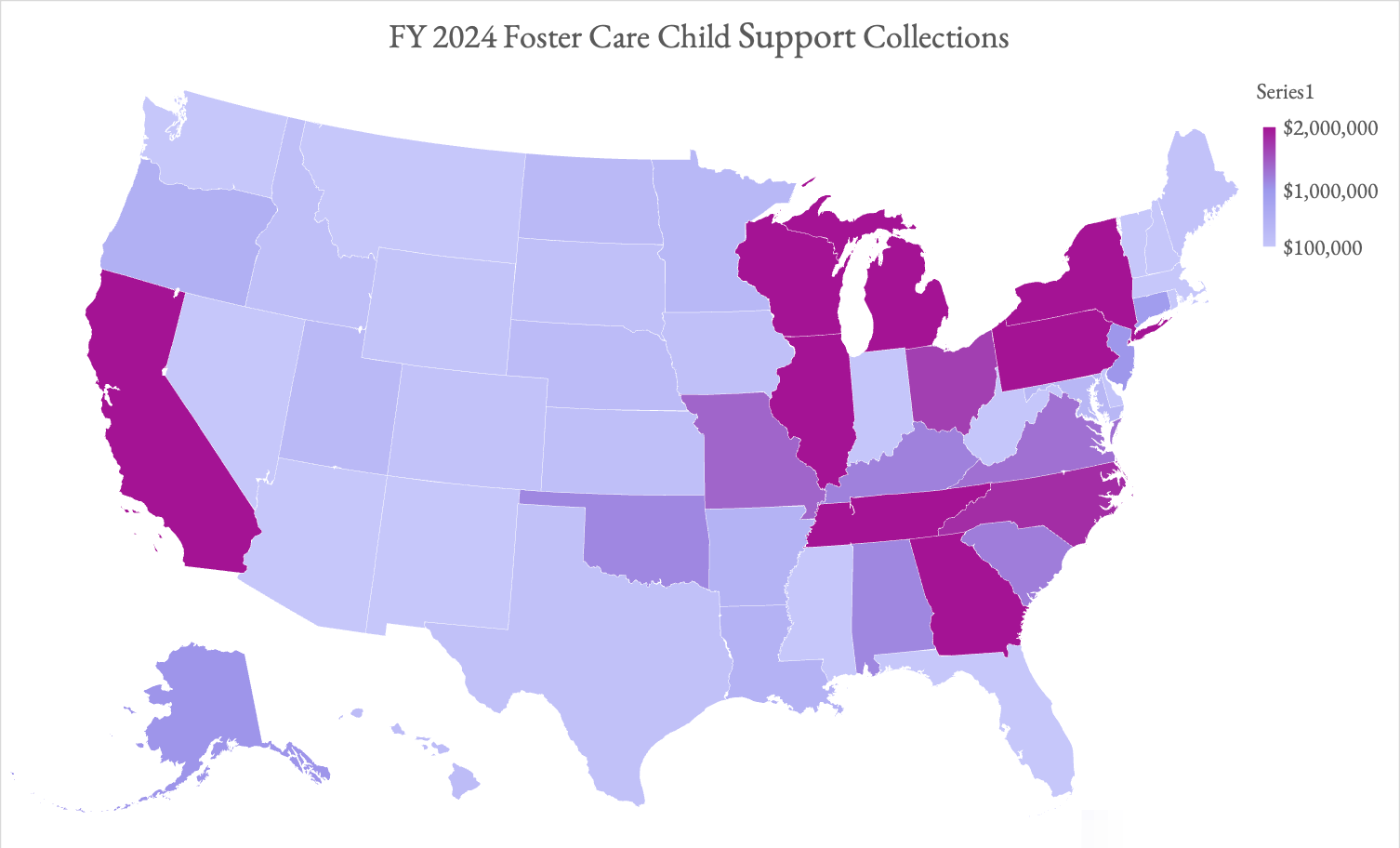
For the past four decades, federal policy has compelled states to collect child support from parents during a child’s stay in care.
Not only is a non-custodial parent’s monthly payment redirected away from the custodial parent to the state, but the custodial parent is also served with a child support obligation to help pay for the cost of care.
Research shows that the effects on families are significant.
Parents carrying even a seemingly modest $100/month obligation see their children remain in care an average of 6.6 months longer than parents without one.
Child support collections reduce the odds of reunification by almost 20 percent. Some children never go home as a result of this policy.
Many of the families who do reunify carry child support debt with them, with interest that keeps growing every year, further compromising their ongoing economic security.
Families carrying that debt are twice as likely to see their children re-enter care.
In 2022, the federal government gave states flexibility to largely stop or narrow these collections.
Only about two dozen states have responded. The rest continue to bill parents for the cost of care.
The Meter Keeps Running
Child support is the largest of these extractions, but not the only one.
Some states require parents to pay for the services the system itself mandates, including health or mental health evaluations or treatment for both parents and children, legal representation, or other court-related costs.
Some of these policies adjust for a parent’s ability to pay, but the effect is directionally the same; deepening poverty for families the system widely regards as among its most financially insecure, right as the case plan clock ticks away.
Why Policies That Undercut the Goal Persist
If our policy principles privilege family reunification, why do policies that work against it persist?
Two structural forces are at the heart of many child welfare policy conundrums.
The first is a collision of principles.
Policymakers typically appreciate the principle of reunification, but they also honor the principle of parental responsibility.
These values clash when children are temporarily separated from parents.
The tension gets expressed in statute by honoring both at once: supporting the child’s return home while billing parents for the separation.
This results in a policy paradox where we require parents to demonstrate economic stability while simultaneously undermining it through fees and cost shifting.
The second structural force is revenue.
States increasingly fund the majority of child welfare expenditures. Facing declining federal investment, agency leaders rationally move to shore up tight budgets.
Collecting from parents looks like a revenue stream sitting in plain sight.
The Revenue That Isn’t
But is it?
Cash-strapped child welfare agencies may see parental fees as a source of revenue, but a cost-benefit analysis reveals something different; they generate a net loss.
In the case of child support, for example, five states conducted analyses showing that the costs of collections outstrip the revenue benefits by a ratio of over 3:1.
And the cost of an extended stay in foster care for even six months longer than necessary totals tens of thousands of dollars, compared to the few hundred dollars a state might collect in revenue from child support payments.
What might appear as a revenue stream may, in fact, be a revenue drain.
The principle collision has a similar structure once it’s examined. Responsibility and reunification compete only if responsibility is defined as cash payment.
But courts and caseworkers don’t recommend reunification because a parent paid their bill; they recommend it because the parent demonstrated safe, stable parenting.
Neglecting Poverty
The architecture of child welfare contains real structures built to support reunification. It also contains contradictory ones that make it much harder for parents to reunify with their children.
Our often oversimplified debate about poverty, neglect, and cash assistance needs real nuance to match the evidence.
In the meantime, our debate neglects an opportunity to discuss how we exacerbate poverty through the contradictions we leave unexamined.
From the Wonk Briefing Room
The Weekly Wonk hits your inbox each Monday to give you a map of the child and family policy landscape in which we find ourselves.
Instead of “more,” our premium members and partners get actionable intel on what you can do about it.
Earlier this year, we ran this analysis by Rebecca Robuck on how debt and deficit politics could impact child and family policy.
In her latest premium brief, she shows how to use a framework for systems change and government reform to approach the child and family policy stake in these debates.
This is a tool you can use if you were intrigued by her question “What if it worked?”
Principles For Navigating The Future Of Child And Family Policy In A Debt-Constrained Era
By Rebecca Robuck
The national debt is no longer a distant concern, and child and family policy leaders can’t treat it as one.
As of May, U.S. federal debt held by the public exceeds GDP — a threshold not crossed since World War II. The Congressional Budget Office (CBO) projects it to keep growing.
Social Security trustees now project insolvency by 2032, increasing the urgency for entitlement reform.
The instinctive response is often defense: protect existing programs, preserve current funding, and prevent harmful cuts.
Some of that work will be essential. But focusing there will miss the mark.
The challenge ahead for child and family policy leaders is to navigate the looming disruption while actively shaping what comes next after it.
Some existing programs are working for families, and deserve rigorous defense.
Others, including significant parts of the child welfare system, are at a stage where incremental improvements are delaying a necessary transition.
The task is to hold both at once: defend what works, and use the opening to design, develop, and build what doesn’t yet exist.
What follows is a set of principles for doing that…
To read the full brief and access all our premium resources, join the Wonk Briefing Room. Individuals can sign up here, or get the team membership rate here.
Organizations interested in going even deeper can reach out to learn more about our partnerships that help you leverage and apply our intel in your strategy.
Wonkatizer
Signals of Safety Net Strains
As state legislative and budget seasons peak, early signals suggest declining child enrollment in safety net programs.
That’s before full implementation of the One Big Beautiful Bill Act.
What Happened
We’ve talked about looming changes in Medicaid policy and how they may impact otherwise eligible children through administrative burden.
Even before those changes, the latest U.S. Centers for Medicare & Medicaid Services data suggest an ongoing decline.
There were 345,000 fewer children enrolled in Medicaid or the Children’s Health Insurance Program in February of 2026 compared to February of 2020, a 1 percent decline.
On the Supplemental Nutrition Assistance Program front, a ProPublica analysis suggests 770,000 children are no longer receiving SNAP benefits following new eligibility and state cost sharing changes.
Why it Matters
These Medicaid enrollment figures control for the temporary expansion of children’s coverage resulting from pandemic-era policy changes.
Temporary continuous enrollment had increased Medicaid coverage by 7 million children by April 2023.
The unwinding of that policy has seen 7.4 million children lose coverage over the last three years, so this coverage loss of 345,000 is a net drop from pre-pandemic levels.
What to Watch
Implementation remains early, so these are likely signs of trend direction. Watch for state budget decisions that hedge against federal funding risk by preemptively tightening.
That’s it for this week.
Stay sharp, Wonks.
~ Z
Partners Making Your Weekly Wonk Possible