

From the Founder’s Desk
Welcome, Wonks. I hope you’re managing to stay warm.
This week brings us a thematic through-line of capacity.
Often, policy assumes it exists evenly, obscuring what matters for implementation.
That story shows up clearly in our Deep Dive on an element of the 2023 kinship rule, unpacking the power of definition, and how operational capacity matters for its impact.
On the premium side of the house, we just kicked off a Director Perspective series on accountability and the Child and Family Service Review, excerpted below.
We’re sharing perspectives from former agency leaders who worked for Republican and Democratic governors on their views about the CFSRs and accountability.
We have a WonkCast with Congressman Danny Davis, sharing what three decades in Congress taught him about how lawmakers and the field can create change.
Finally, our Wonkatizers surface two quieter signals: IV-E prevention’s persistent implementation gap, and updated poverty guidelines.
The probability of a partial government shutdown is up significantly, with Senate Democrats signaling they’ll block a House-passed combined appropriations bill.
At issue is the bill’s Department of Homeland Security provisions.
Those face rising scrutiny for renegotiation after federal immigration agents’ fatal shooting of U.S. citizen Alex Pretti in Minneapolis on Saturday.
The combined appropriations bill includes Health and Human Services. Current funding runs through midnight Friday. Stay tuned.
Let’s get into it.
Special thanks to Binti for their foundational sponsorship of WonkCast.

From the Wonk Briefing Room
As a report from the Department of Health and Human Services (HHS) made clear last year, federal child welfare oversight has been running on autopilot for decades.
Georgia's former child welfare director Tom Rawlings lays out why he thinks the current model isn’t salvageable—and what should replace it.
To read the entire brief and get them weekly sign up for the Wonk Briefing Room here.
Director Perspective: Time to Scrap the CFSR
By Tom Rawlings, Former Director of Georgia’s Division of Family and Children Services
Over $11 billion each year.
That’s how much federal taxpayers provide annually to state child welfare agencies. Ensuring those funds are used to advance their intended goals is critical.
The public needs to know– are these agencies:
keeping children safe from abuse and neglect;
respecting the rights of families, foster families, and providers;
caring well for children in foster care;
providing due process and transparency; and
moving quickly to help foster children safely return home or find a stable, permanent home?
Unfortunately, federal oversight of those expenditures has in practice become little more than bureaucracy theater.
The chief tool the federal Children’s Bureau has been using for the past 25 years -- the Child and Family Services Review (CFSR), isn’t up to the task.
Performative bureaucratic box-checking neither provides a reliable gauge of child welfare system success nor focuses agency leaders on areas for potential improvement. A simpler, more focused approach could.
–
To read the rest of this premium brief and get all our others, sign up for the Wonk Briefing Room here.
Weekly Wonk Deep Dive
The New Kinship Frontier: When Definition Gives Way to Capacity
The Department of Health and Human Services’ (HHS) 2023 kinship rule represents one of the most significant shifts in U.S. child welfare policy this decade.
Most attention on the rule has focused on how it allows states to adopt separate licensing standards for kin caregivers and pay them the same as non-relative foster parents.
As a result, eighteen states and six tribes have now adopted separate licensing standards.
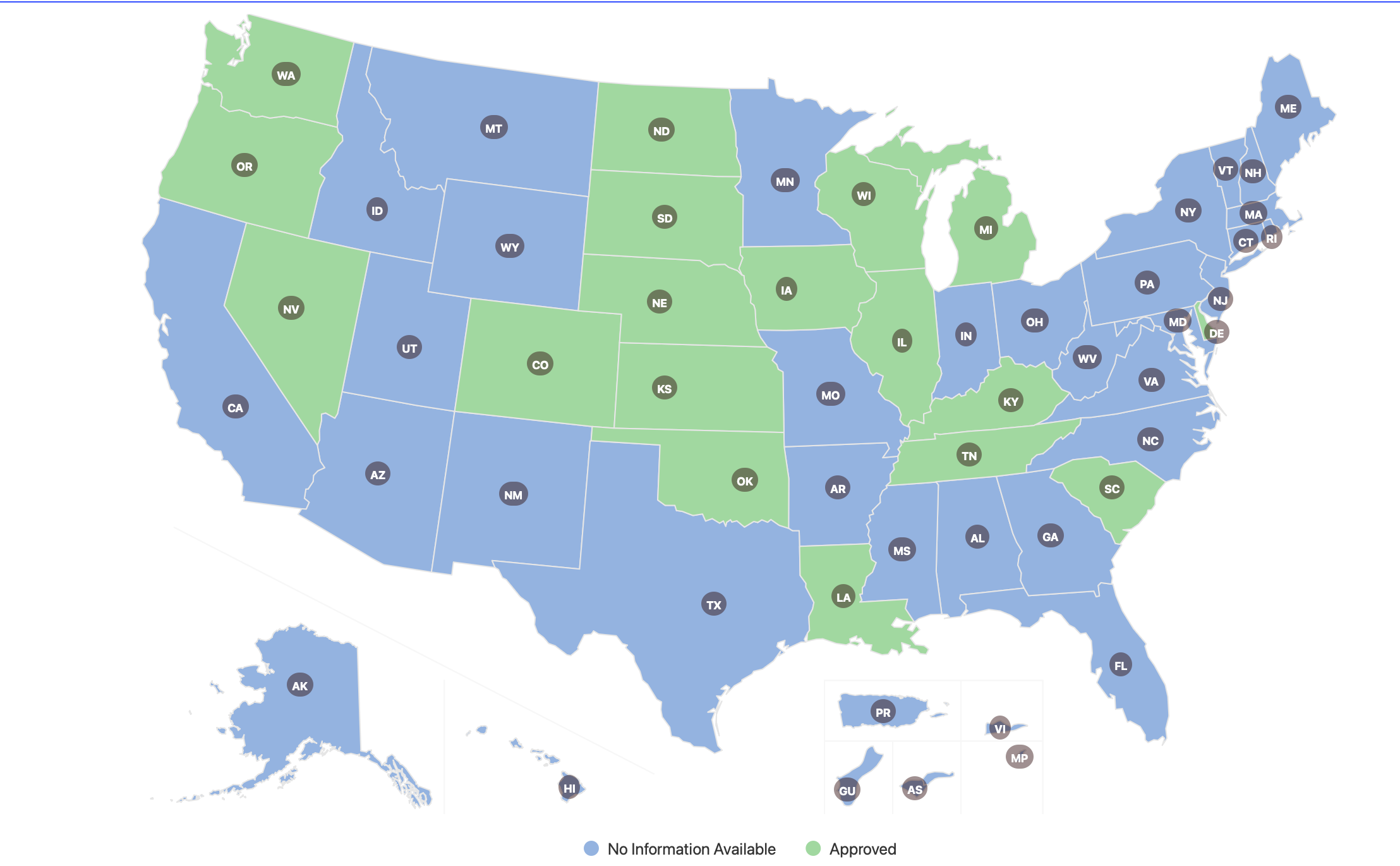
Less attention has gone to how the rule reshapes how the system defines family in the first place–and therefore which families it financially supports with real dollars.
This piece focuses on one of the rule’s most consequential opportunities: the ability for states to expand who is recognized and supported as kin.
Expanded definitions are only half the equation.
State capacity—family-finding staff, clear guidance, quality assurance, and payment infrastructure—determines whether broader definitions translate into actual support for families, or offer discretion without delivery.
The Rule’s Approach to Defining Kin
HHS did not mandate a single definition of kin. Instead, it gave states room to act.
States can decide if kin includes people related by blood, marriage, or adoption, as well as “other individuals who have an emotionally significant relationship” with the child, also known as fictive kin.
That phrase matters. Combined with the rules’s requirement for equal pay for kin and non-relative foster parents, it unlocks financial support for fictive kin.
Godparents. Teachers. Coaches. Long-time neighbors. The adults a child already knows and trusts and thinks of as extended family.
Maximizing the pool of financially supported kin placements reduces trauma and increases stability–a fundamental shift in focus from who the system recognizes as family to whom a young person might define as their family.
It’s one youth advocates and families with lived expertise have long called for.
While earlier laws allowed for placement with fictive kin, they did not resolve licensure or payment.
Fictive kin who sought reimbursement generally had to meet the same licensing standards as non-relative foster parents.
The 2023 kinship rule changes that status at scale. It shifts fictive kin from a case-by-case “waiver” status to a more standardized placement category with pay parity.
Emerging State Strategies: The New Kinship Continuum
States enter implementation of the kinship rule with very different legal starting points.
A few states tightly restrict “kin” to blood or marriage. In these jurisdictions, the federal rule’s flexibility is bottlenecked by state law.
Others already allow broader recognition of family by relationship or custom.
The result is an emerging continuum—from narrow definitions that constrain implementation to broader ones that ease it.
To illustrate what this continuum looks like, here are examples of a few states with definitions ranging from narrow to broad.
At the Narrow End
In jurisdictions with statutes that tightly define kin as blood, marriage, or adoption, the federal rule’s flexibility runs into a hard legal ceiling.
Alabama has a narrow definition of relative, limiting it to “an individual legally related to the child by blood, marriage, or adoption within the fourth degree of kinship.”
States in the Middle
Other states have taken steps to recognize fictive kin in policy, but remain constrained by statute.
Tennessee includes individuals with an “emotionally significant relationship” with the child in their definition of Relative/Kinship Caregiver in policy, making fictive kin a viable and prioritized placement.
However, even as a state with an approved plan, this does not yet functionally make fictive kin eligible for different licensing requirements and equal pay, because of a statutory definition that restricts a Kinship Foster Parent to blood/legal relatives.
As a result, children may be placed with fictive kin, but those kin remain ineligible for streamlined licensing standards or equal pay.
This illustrates a common implementation challenge: policy can move faster than rate-limiting aspects of law upon which it relies, creating partial access without full parity.
At the Broad End
At the broad end of the continuum are states where statutory definitions already encompass family by relationship, easing implementation of the kinship rule.
California defines a Non-Relative Extended Family Member (NREFM) as any adult who has an established familial or mentoring relationship with the child, in addition to the standard blood/adoption definition of relative.
NREFMs are eligible to receive the same payment rate as non-relative foster care providers.
This is an example of a state whose process already reflected most of what the rule allows for. It remains to be seen what changes, if any, they make.
Pennsylvania defines kin to also include a godparent recognized by an organized church, a member of the child’s Tribe, or a person with a significant, positive relationship with the child or family.
Maryland’s definition includes “an unrelated adult with a strong familial or other significant bond.”
Wisconsin’s definition includes an individual with a “significant emotional relationship... that is similar to a familial relationship.”
For Tribal child welfare agencies, the rule strongly reinforces existing policy under the Indian Child Welfare Act (ICWA) which prioritizes placement with the child’s tribe or extended family as defined by the tribe’s law or custom.
The new rule explicitly provides a seamless funding pathway for Tribal agencies to place children with kin defined by culture, recognizing that a safe home is often a culturally connected home.
When Capacity Becomes the Test
The kinship rule moves decision-making closer to the lived reality of children and families; asking caseworkers to assess relational strength rather than bloodlines, and systems to value continuity over compliance.
But discretion without infrastructure can create risks.
Determining whether a relationship is “emotionally significant” requires time, skill, documentation, and supervision.
Without those supports, expanded definitions can be applied inconsistently, leading to uneven access to support.
Investment in family-finding staff, clear guidance, quality assurance, access to licensure, and payment parity are foundational markers of state capacity.
Developing and managing that capacity is as important to implementing fictive kin licensure as developing a definition.
Wonkatizer
Title IV-E Prevention’s Real Rate Limit
What Happened
A new ASPE brief examining the Title IV-E Prevention Program shows limited uptake.
As of December 2025, fewer than one-third of Clearinghouse-approved programs appear in any approved prevention plan.
Plans average just five programs, most commonly Multisystemic Therapy, Parents as Teachers, and Functional Family Therapy.
Why It Matters
Prevention spending has grown rapidly—nearly 20-fold since FY2020—but remains marginal in scale relative to foster care.
A gap between statutory ambition and operational reality remains wide.
The report underscores from a different angle what last week’s Deep Dive unpacked; the current construction of the evidentiary requirements are a real rate limit.
What to Watch
Whether ACF and Congress start exploring updates to Family First to boost uptake.
The law turns eight next month; now is a ripe moment to shape that conversation.
2026 Poverty Guidelines Updated
What Happened
HHS has released the 2026 federal poverty guidelines, reflecting a 2.63 percent CPI-U adjustment between calendar years 2024 and 2025.
For the contiguous U.S., the guideline is now $15,960 for a single individual and $33,000 for a family of four, with higher thresholds for Alaska and Hawaii.
Why It Matters
Poverty guidelines are a load-bearing input across child and family policy.
They shape eligibility for Medicaid, TANF, child care assistance, and numerous prevention and support programs.
Metrics like this are the subject of significant policy debate in their own right, as they encode dividing lines that reflect assumptions about affordability.
—
Stay sharp, Wonks.
Z
Partners Making Your Weekly Wonk Possible


